
Understanding Your Accessory Collection
Before diving into accessory storage solutions, start by taking a good look at your collection. Assess what you own by type—jewelry, scarves, belts, handbags, hats—and note how often you actually wear each piece. This helps you prioritize items and decide which ones need the most convenient storage.
Next, declutter unused or damaged pieces. Keeping only what you love and use reduces clutter and makes your storage system much more effective. Toss or donate broken, outdated, or rarely worn accessories to free up space and focus on what truly matters.
Finally, identify common challenges you face with your accessories. Do necklaces often tangle? Are earrings lost in drawers? Does dust settle on your handbags? Knowing these issues upfront lets you choose targeted accessory storage solutions that protect your items and keep them visible and accessible every day.
Essential Principles of Effective Accessory Storage
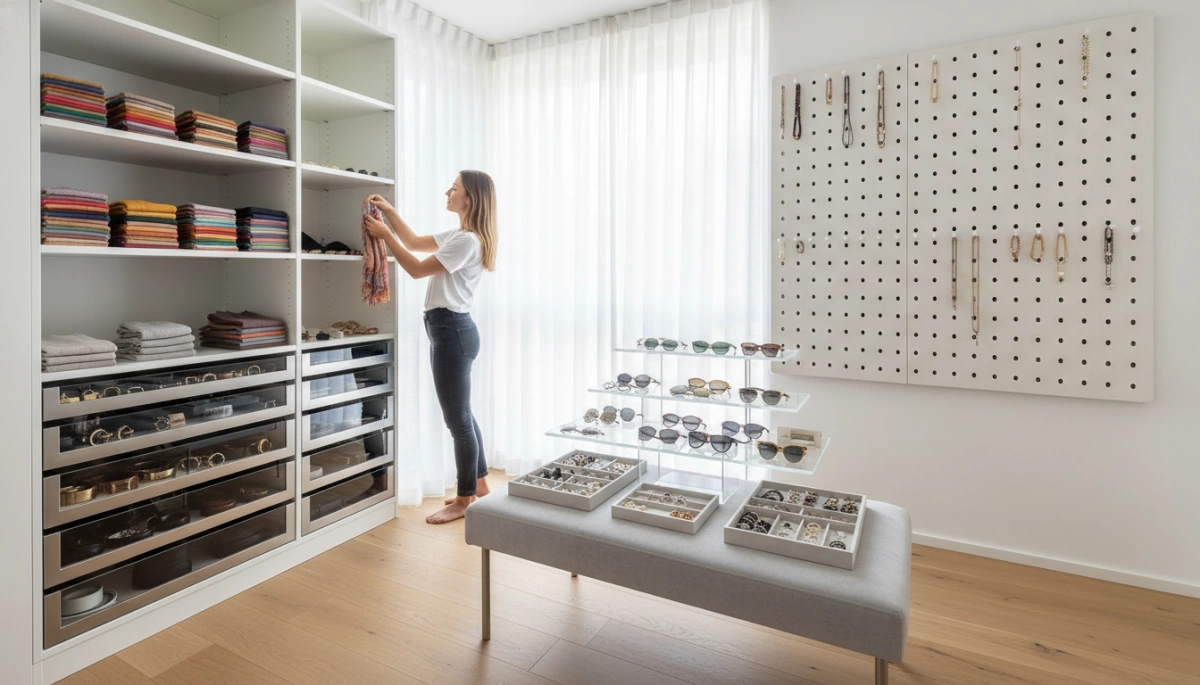
When streamlining accessories storage, visibility and accessibility are key. Having your jewelry, scarves, belts, and handbags clearly displayed means faster decisions and less time digging through clutter each morning. Use organizers that keep items in plain sight, such as clear bins, open trays, or wall-mounted jewelry organizers, to ensure you see what you own at a glance.
Protection strategies are just as important. Prevent tangled necklaces by using specialized necklace holders or hooks designed for tangle-free necklace storage. Store delicate pieces like rings and bracelets in padded trays or cushioned compartments to avoid scratches. For scarves and belts, folding techniques and hanging loops not only save space but protect fabric from creasing or damage.
Space optimization matters when working with limited closet, drawer, or display space. Use drawer dividers for jewelry drawer organization, shelf dividers for handbags, and stackable storage for hats and clutches to make the most of vertical areas. Integrating a mix of these solutions creates a smooth fashion routine by keeping everything neat and easy to reach.
For ideas on organizing your overall wardrobe alongside your accessories, check out tips on building an efficient walk-in wardrobe with essential features for a modern setup.
Storage Solutions by Accessory Type
Organizing your accessories effectively means choosing the right storage for each type. For jewelry organization, keep necklaces hanging with dedicated necklace holder tangle-free designs to avoid knots. Use earring organizer drawers with compartments to separate pairs, and rely on ring and bracelet trays to keep those pieces visible and accessible. Don’t forget a sturdy watch case if you have a collection of timepieces to protect them from scratches.
For scarves and belts, use hanging loops or hooks to save space and prevent wrinkles. Folding scarves neatly in drawers with dividers also works well if you want quick access. When it comes to handbags and clutches, maximize your closet space with shelf dividers or sturdy hooks, and consider clear bins for seasonal rotation while keeping everything visible. This approach is great for handbag closet organization.
Hats and less common accessories can benefit from wall-mounted racks or stacked storage solutions that help them maintain their shape and stay dust-free. Using these tailored solutions ensures every item in your collection has its place, making it easier to maintain order and find what you need quickly.
For more ideas on organizing your wardrobe and making outfit planning easier, check out this helpful guide to sweater trends and styling here.
Creative and Practical Storage Ideas
When it comes to streamlining accessories storage, mixing creativity with practicality makes a big difference. Drawer-based dividers and trays are perfect for keeping smaller items like rings, bracelets, and earrings neatly separated—this boosts visibility and reduces search time. For necklaces, a wall-mounted jewelry organizer or pegboard can keep them tangle-free and easy to grab, while door hooks offer extra hanging space for scarves, belts, or bags without eating up floor room.
Display options also add flair and function. Jewelry stands, vanity trays, or mirrors with built-in storage combine style with everyday access, encouraging you to use your accessories effortlessly. Deciding between DIY projects and ready-made organizers depends on your style and budget. DIY offers customization but requires time; store-bought options bring convenience and variety.
Lastly, integrating these storage solutions into your closet or bedroom setup creates a cohesive, easy-to-navigate system that suits your routine. For more inspiration on clever and stylish storage, check out practical accessory organization tips available online to elevate your daily fashion choices.
Step-by-Step Guide to Implementing Your Accessory Storage System
Getting your accessory storage organized doesn’t have to be overwhelming. Follow this simple guide to create a streamlined system that works for your collection and daily routine.
1. Sort and Categorize Your Accessories
- Divide items by type: necklaces, earrings, rings, scarves, belts, handbags, hats, etc.
- Separate frequently worn pieces from occasional or seasonal ones.
- Inspect items for damage and set aside anything to repair or declutter.
| Category | Examples | Usage Frequency |
|---|---|---|
| Jewelry | Necklaces, rings, bracelets | Daily or special use |
| Scarves & Belts | Silk scarves, leather belts | Seasonal or frequent |
| Handbags & Clutches | Tote bags, evening clutches | Daily or occasional |
| Hats & Other | Sun hats, beanies | Seasonal or rare |
2. Choose and Set Up Storage Tools
Pick storage solutions tailored to each accessory type to keep everything visible and tangle-free. Some options include:
- Jewelry drawer dividers and trays for rings, earrings, and bracelets.
- Tangle-free necklace holders or wall-mounted organizers for easy access.
- Hooks or loops for scarves and belts.
- Shelf dividers or clear bins for handbags.
- Hat racks or stackable boxes to preserve shape.
3. Label and Zone Your Space
Create dedicated zones for each category within your closet or dressing area. Labeling helps maintain order and speeds up your morning routine.
| Zone | Storage Tool | Label Example |
|---|---|---|
| Jewelry | Drawer tray, wall hooks | \”Daily Jewelry\” |
| Scarves/Belts | Hanging loops, hooks | \”Scarves & Belts\” |
| Bags | Shelves, clear bins | \”Handbags & Clutches\” |
| Hats | Wall-mounted racks | \”Hats & Accessories\” |
4. Routine Maintenance Tips
- Set a regular schedule (weekly or monthly) to tidy up and return items to their zones.
- Remove any newly damaged or rarely worn pieces.
- Adjust storage solutions as your collection changes to keep things efficient.
This step-by-step approach ensures your accessory storage system stays practical and clutter-free, giving you quick daily access and making outfit planning effortless.
How Streamlined Storage Enhances Fashion Choices
A well-organized accessory collection can dramatically reduce decision fatigue, making your mornings quicker and less stressful. When your jewelry, scarves, belts, and handbags are stored visibly and accessibly, you spend less time digging around and more time confidently picking the perfect pieces. This kind of wardrobe accessory organization encourages versatile outfit building by giving you a clear view of all your options, helping you mix and match with ease.
For example, having tangle-free necklace storage and clearly divided jewelry drawer dividers means you won’t waste time untangling chains or searching for matching earrings. Similarly, scarves and belts stored on hooks or hanging loops make them easy to spot and pair with outfits in seconds. Visible jewelry displays and handbag closet organization not only protect your items but inspire creative outfit combinations, transforming your daily routine into a seamless fashion experience.