
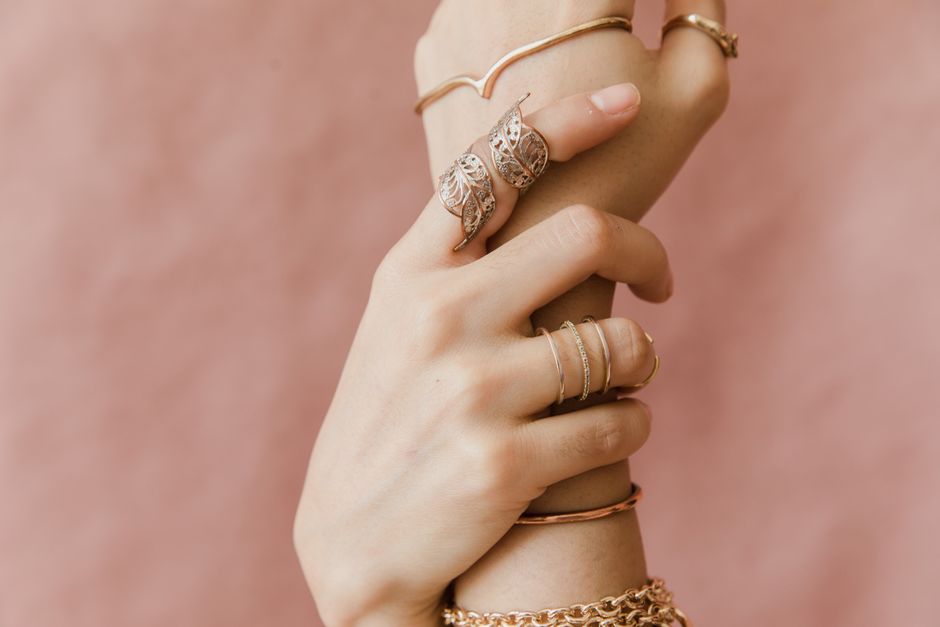
A 50/50 split is usually the quickest way to make gold and silver accessories look accidental. After years of wearing both metals, I have found that the polished version follows a simpler rule: one metal leads, the other repeats in small but deliberate places. The result looks styled instead of random.
This guide explains how to choose a dominant metal, use a bridge piece, stack jewelry without creating visual noise, and avoid the mistakes that make mixed metals look cheap. My strongest advice is simple: start with one mixed-metal item or one repeated detail. Do not buy an entire new jewelry wardrobe before testing the idea.
Why mixed metals look intentional instead of accidental
Gold and silver do not clash because they are different colors. They clash when the outfit gives them no shared visual language. Metal color is only one part of the picture. Shape, finish, scale, and placement tell the eye whether two pieces belong together.
Think in temperature and finish
Yellow gold has warmth and a soft glow. Bright silver has a cooler, sharper look. That contrast works best when the pieces share another trait. Pair a rounded gold hoop with a rounded silver ring. Match a smooth polished surface with another polished surface. If one item is chunky and sculptural while the other is thin, ornate, and covered in stones, the problem is not the color. The proportions are fighting.
Finish matters just as much. High-shine gold beside tarnished silver can look like a mistake, while brushed gold beside brushed silver feels calm and modern. I also prefer warm gold with clean silver over yellow gold with heavily oxidized silver. The first combination looks deliberate on most skin tones and with most clothing.
Let one metal lead
Pick a lead metal before putting on jewelry. Make it roughly 60 percent of the visible metal and let the second metal supply the remaining 40 percent. This does not mean counting every tiny charm. It means giving the eye one clear anchor.
For most wardrobes, I would lead with gold and use silver as the contrast. Gold reads well with black, cream, denim, brown, and olive. Lead with silver instead when your clothes are mostly charcoal, white, navy, cool gray, or icy pastels. The winning combination is the one that supports your clothes rather than competing with them.
Use the 60/40 rule to build a metal palette
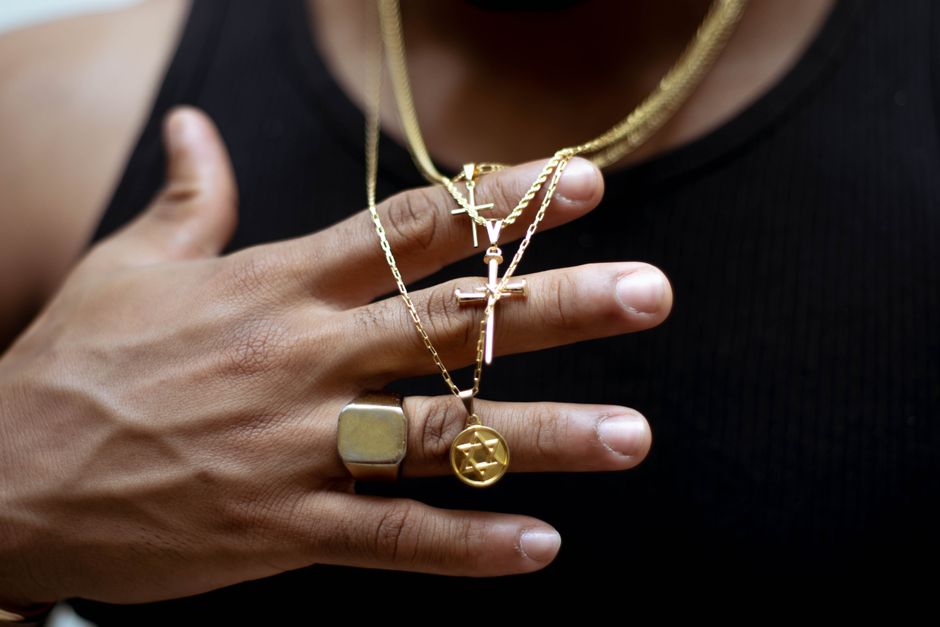
The 60/40 rule is the most useful starting point because it removes guesswork. Choose the dominant metal first, then place the smaller metal where the eye can find it twice. One silver ring floating beside three gold pieces feels disconnected. Two silver details, such as a ring and a watch case, create a visual path.
| Outfit situation | Lead metal | Contrast metal | Best placement | Verdict |
|---|---|---|---|---|
| Black blazer and cream top | Gold | Silver | Gold earrings, silver ring | Warm, sharp, and easy to wear |
| White shirt and gray trousers | Silver | Gold | Silver watch, gold pendant | Cleanest choice for office dressing |
| Blue denim and brown leather | Gold | Silver | Gold necklace, two silver rings | Relaxed without looking plain |
| Navy knitwear and black shoes | Silver | Gold | Silver hoops, gold bracelet | Cool and understated |
| Printed dress with several colors | One metal only | Use mixed metal once | Single pendant or ring | Prevents the print from becoming busy |
Keep the ratio visible across the whole outfit, not on one wrist alone. If your earrings are gold, a gold necklace can establish the lead. Add silver at the hand or wrist, then stop. This placement keeps the contrast spread across the body instead of turning one area into a pile of metal.
My verdict: use 60/40 for everyday outfits and move closer to 70/30 when your clothes already have a bold print, strong neckline, or bright color. A quieter outfit can handle a more even metal mix, but a busy outfit needs one clear decision.
How to stack rings, earrings, necklaces, and bracelets
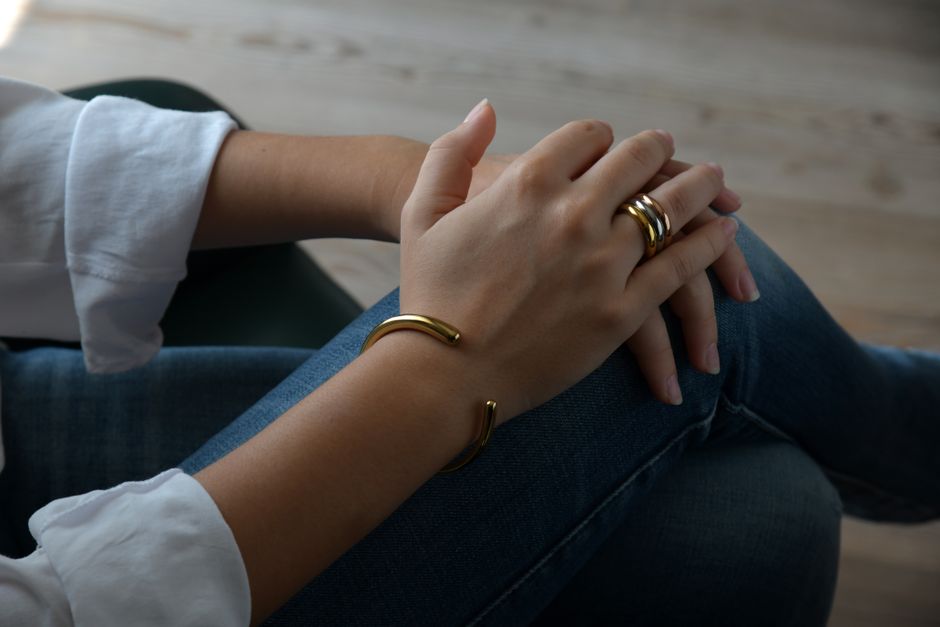
Stacking mixed metals works best when each area has a job. Use the following order so the outfit builds from one anchor instead of becoming a last-minute pile.
- Start at the face. Choose earrings in the lead metal. The Mejuri Dôme Brioche Hoops cost around $178 in 18k gold vermeil and measure about 16.3mm in diameter and 9.8mm wide. Their rounded knot shape is easier to mix with silver than a sharp geometric earring because the form looks soft and connected. For silver-led outfits, the same design in sterling silver costs around $158.
- Add one neck piece. Keep the necklace lighter than the earrings unless the necklace is your bridge piece. A thin silver chain with gold hoops is enough for a casual outfit. Add a second chain only when the lengths differ by at least 5cm; chains that sit at the same point on the chest look tangled.
- Place contrast on the hands. If gold leads at the face, use one or two silver rings. Keep the widths close. A slim 2mm silver band beside a medium 4mm gold signet can look balanced, while a delicate silver band beside an oversized gold cocktail ring usually looks accidental.
- Repeat the contrast at the wrist. A silver watch with a gold bracelet is an easy pairing because the watch provides a large, stable silver shape. Leave at least one finger-width of space between bracelets so they do not scrape and visually merge.
- Stop before every zone contains both metals. You do not need gold and silver in your ears, neck, hands, and wrists at the same time. Two or three mixed areas are enough. My favorite formula is gold hoops, a simple silver ring, and a gold watch with one silver bracelet.
The best product choice here is the Mejuri Dôme Brioche Hoops when you want one everyday gold anchor. Their small diameter keeps them useful for work and weekends, while the rounded profile gives silver rings and watches something to echo. Buy the silver version instead if your wardrobe is mostly cool neutrals and your current jewelry already leans yellow-gold only because of one old piece.
Mistakes that make mixed metals look cheap

Most bad mixed-metal outfits fail because of proportion or maintenance, not because gold and silver are impossible to combine.
- Mixing too many finishes. Bright yellow gold, mirror-polished silver, blackened metal, glittering stones, and brushed steel in one outfit create visual static. Keep two finishes at most.
- Using one tiny contrast detail. A single miniature gold charm on a completely silver outfit can look like an afterthought. Repeat the contrast at least twice or remove it.
- Ignoring scale. A heavy cuff needs a substantial partner. A thin chain cannot visually balance a wide sculptural bangle unless the rest of the outfit is very simple.
- Putting every mixed piece on one side. One wrist covered in gold and silver while the other side is empty makes the outfit lean. Spread the colors across the face, neck, hands, and wrists.
- Combining different undertones without a reason. Pale champagne gold and bright yellow gold can look unrelated beside blue-white silver. If you use two gold tones, repeat one of them in a small detail.
- Buying plated pieces without checking care needs. Water, perfume, sweat, and rough storage wear down plating. Store pieces separately, put jewelry on after fragrance, and remove delicate plated items before swimming or showering.
- Adding a bridge piece that is too loud. A large two-tone necklace should be the focal point. Do not surround it with equally large earrings and rings. Let one item speak.
My strongest warning is against buying a random mixed-metal set just because it is sold together. Matching packaging does not guarantee matching proportions. Check the measurements, thickness, clasp size, and finish before buying. A simple pair of earrings and one plain ring will usually look more expensive than a crowded set with five unrelated shapes.
My 2026 formula for buying and wearing mixed metals
The formula I use is one lead metal, one bridge or repeated contrast, and a hard limit of three visual focal points. Start with the jewelry you already wear most. If gold hoops are your daily piece, let gold lead. Add silver at the hand or wrist, then repeat it once somewhere else. If silver is your base, reverse the order.
For a first purchase, I would choose the Mejuri Dôme Brioche Hoops in the metal that matches your existing wardrobe, then add one plain ring in the opposite metal. For a more polished statement, the Missoma Lucy Williams Knot Torque Necklace is the strongest single bridge because its gold-plated and silver-plated knot joins the colors in one object. The Missoma Square Snake Chain Bracelet is the quieter choice for casual outfits and people who prefer wrist jewelry.
Do not buy more until you can create three outfits from what you own. That test catches most poor purchases. If the pieces work with a white shirt, dark knitwear, and denim, the mix has enough range for real life.
My final recommendation: let gold lead at roughly 60 percent, repeat silver in two small places, and use one rounded or linked shape to connect them. For most wardrobes, gold hoops plus a plain silver ring is the best starting combination; for a single elevated purchase, choose a simple two-tone necklace rather than a full matching set.