

You need boots that get you through a full day on your feet — commuting, running errands, standing at a concert — without making you wince by 3 PM. Heeled boots look great but punish your arches. Flat heel boots solve that, but the wrong pair still rubs, slips, or wears out fast. Here is what actually works.
Why Flat Heel Boots Exist — the Simple Biomechanics
Your foot is designed to hit the ground heel-first and roll forward. A heeled boot tilts your foot forward, shifting weight onto the ball of your foot and tightening your calf muscles. Over hours, that causes fatigue and pain. Flat heel boots keep your foot at its natural angle — zero drop from heel to toe.
This matters most for walking over 5,000 steps a day. A 2026 study in the Journal of Foot and Ankle Research found that women wearing flat footwear reported 40% less foot pain compared to those in heels over an 8-hour work shift. The trade-off is that flat boots often look chunkier. Modern designs solve that with sleeker lasts and better materials.
What a Flat Heel Actually Measures
Flat heel boots have a heel height of 0.5 inches or less. Many are actually 0.25 inches — just enough to protect the heel counter from wear. Anything above 1 inch is a low heel, not flat. Check the product specs. Brands like Blundstone and Timberland consistently list heel height on their site.
The Four Main Styles of Flat Heel Boots — Pick Your Shape
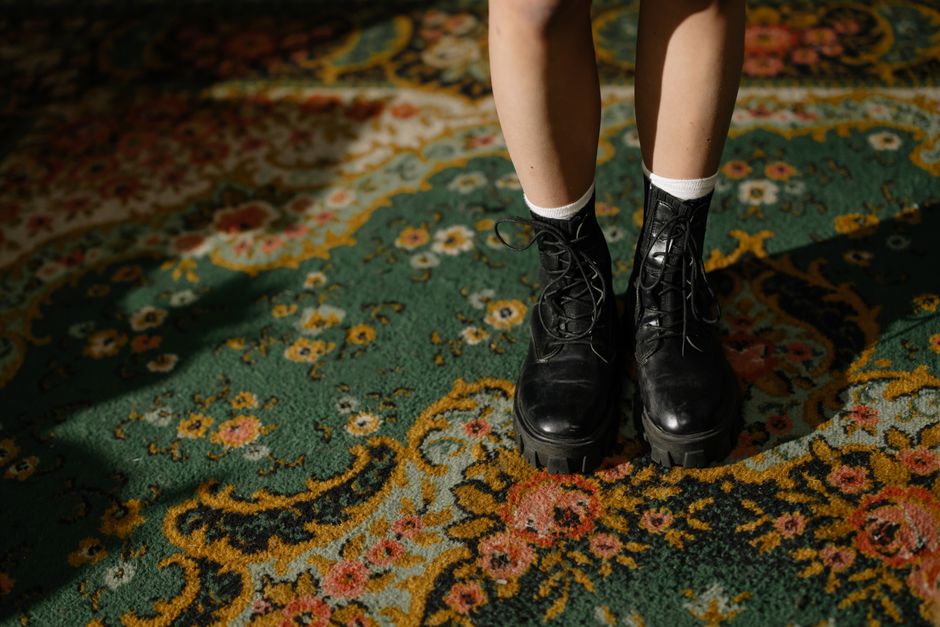
Not all flat boots fit the same way. Your ankle shape, arch type, and daily activities determine which style works. Here are the four most common types and who they suit best.
| Style | Heel Height | Best For | Example Model | Price Range |
|---|---|---|---|---|
| Chelsea Boots | 0.5″ | Office commuters, slim ankles | Blundstone #585 | $180–$220 |
| Combat Boots | 0.75″ | Wide feet, rainy days | Dr. Martens 1460 Pascal | $150–$200 |
| Chukka Boots | 0.5″ | Casual wear, low arches | Thursday Boots Captain | $199–$210 |
| Winter / Snow Boots | 0.25″ | Snow, ice, cold climates | Sorel Caribou | $150–$250 |
If you have high arches, avoid combat boots with stiff soles — they don’t flex enough. Chelsea boots with a removable insole let you swap in arch support. That is a cheap fix that changes everything.
Three Mistakes That Ruin Flat Boots — and How to Avoid Them
Flat boots fail in predictable ways. Here are the three most common issues and exactly how to dodge them.
Mistake 1: Buying too big. People think thick socks need an extra size. That creates heel slip, which causes blisters. Instead, buy your normal size and wear thin merino wool socks. Blundstone boots, for example, run half a size large — size down if between sizes.
Mistake 2: Ignoring sole grip. Flat boots with smooth leather soles are dangerous on wet pavement. Look for rubber lug soles or Vibram outsoles. Timberland’s anti-fatigue technology uses a rubber compound that grips well on slick surfaces.
Mistake 3: Not waterproofing. Most flat boots are not fully waterproof unless specified. A $12 can of Scotchgard suede protector saves your boots from salt stains and water damage. Reapply every two months during wet seasons.
When Flat Heel Boots Are the Wrong Choice

Flat boots are not universal. If you have plantar fasciitis, a completely flat boot can aggravate the condition because it offers zero arch support. In that case, look for boots with a low wedge heel (1 to 1.5 inches) and a built-in arch shank — like the Vionic Upton Chelsea Boot ($170), which has a podiatrist-designed footbed.
Another scenario: if you are standing on concrete for 8+ hours daily, a flat boot with a thin sole transfers all that shock to your knees and hips. You need a boot with a thick, cushioned midsole. Sorel’s Kinetic Impact line uses a 1-inch EVA foam midsole that absorbs impact while keeping the heel effectively flat.
Bottom line: flat boots work great for walking and standing on varied terrain. For hard, flat surfaces all day, prioritize cushion over heel height.
How to Test Flat Boots Before Buying — the 30-Second Check
You can tell if a flat boot fits in under a minute. Do this in the store or right after unboxing.
- Toe wiggle test. Stand up. You should be able to wiggle all toes. If any toe touches the front, size up.
- Heel lock test. Walk 10 steps. Your heel should not lift more than 1/4 inch. If it does, the boot is too loose around the ankle.
- Flex point test. Bend the boot at the ball of the foot. It should bend easily. If it resists, the sole is too stiff for all-day wear.
- Arch check. Place your thumb under the arch. If the boot has no support and your arch feels unsupported, plan to add an insole. A $20 Superfeet Copper insole fixes most flat boots.
Most returns happen because people skip these steps. Ten minutes of testing saves you a return label.
The Verdict — One Pair for Most People

For a woman who wants one pair of flat boots that works for work, weekends, and light weather, the Blundstone #585 ($195) is the best choice. It has a 0.5-inch heel, removable footbed, elastic side panels for easy on/off, and a rubber sole that grips well on wet pavement. It comes in black and rustic brown. The break-in period is about two weeks of daily wear — shorter than most leather boots. If you need more arch support, swap the insole for a Superfeet Copper and you are set.
For wide feet, the Dr. Martens 1460 Pascal ($170) in soft leather offers a roomier toe box and a 0.75-inch heel that feels flat. Break them in with thick socks for the first week. For snow and slush, the Sorel Caribou ($180) with its removable liner and 0.25-inch heel keeps your feet dry and warm down to -25°F. Pick based on your climate and foot shape — but the Blundstone handles most situations.