
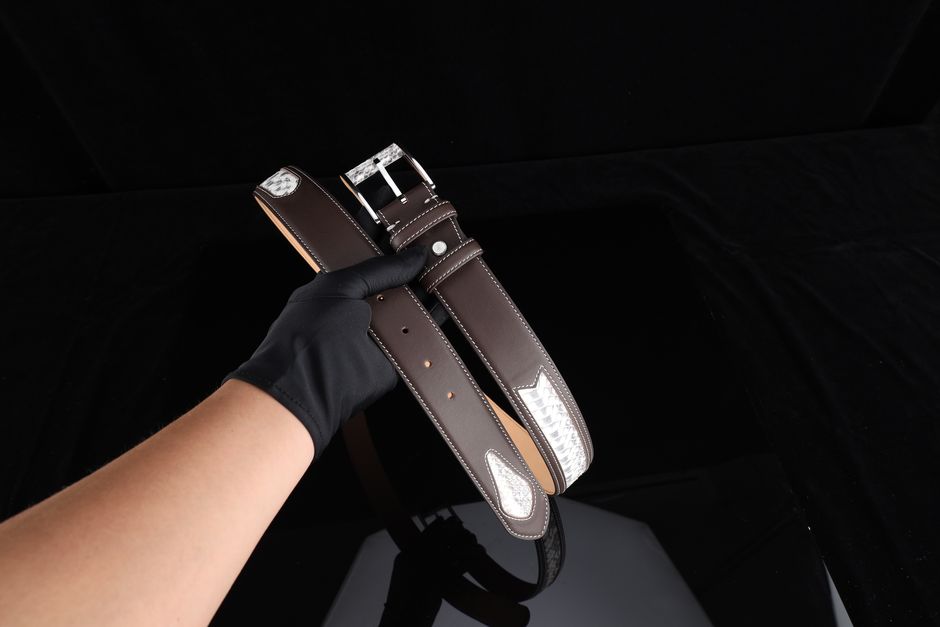
You are standing in front of a mirror, wearing a new suit. The jacket fits. The trousers break cleanly over your shoes. Then you look down. The belt you grabbed is 1.5 inches wide, has a scratched silver buckle, and the leather is already creasing after two months. That belt is pulling the whole outfit down.
This article explains how to choose a belt that actually works for your wardrobe. No product links. No rankings of “top 10 belts of 2026.” Just the criteria that matter: leather grade, width, buckle style, color matching, and construction method. If you understand these five things, you will never buy a bad belt again.
Leather Grade: The Single Most Important Decision
Belt leather is not all the same. The difference between a belt that lasts three years and one that lasts fifteen years is almost entirely about the leather grade.
Full-grain leather
Full-grain leather uses the top layer of the hide, with the natural grain left intact. This is the strongest part of the skin. It develops a patina over time — darkening, softening, and conforming to your body. A full-grain belt from a maker like Allen Edmonds or Equus Leather costs roughly $80–$150. It will outlast three cheaper belts.
Top-grain leather
Top-grain leather is sanded down to remove surface imperfections, then embossed with an artificial grain. It is thinner and less durable than full-grain. Most department-store belts in the $40–$70 range use top-grain leather. They look fine for a year, then the finish starts to crack.
Genuine leather and bonded leather
“Genuine leather” has no legal definition in most states. In practice, it is the lowest-quality cut, often split from the underside of the hide and coated with paint. Bonded leather is shredded scraps glued together. Neither belongs on a suit or even good jeans. A belt labeled “genuine leather” for $25 is a fast-fashion item, not an investment.
Verdict: If you own one belt, make it full-grain. If you cannot afford $80, buy a used full-grain belt from a thrift store or eBay. It will still outperform a new top-grain belt.
Belt Width: 1.25 Inches vs. 1.5 Inches

Width is not a style preference. It is a functional requirement dictated by your trouser belt loops.
Dress trousers and chinos typically have narrow belt loops designed for a 1.25-inch (32mm) belt. Jeans and casual trousers usually take a 1.5-inch (38mm) belt. A 1.5-inch belt forced through dress trouser loops will bulge and wear the fabric. A 1.25-inch belt in jeans loops looks too narrow — the belt slides side to side and the buckle looks small.
Common mistake: Men buy one belt for all pants. Then the belt either does not fit through the loops, or it looks undersized. You need at least two widths: one for dress, one for casual.
Most belt makers list the width in the product description. If you are unsure, measure the widest loop on your most-worn trousers. That number is your target width.
Buckle Styles: Prong, Ratchet, and Frame
The buckle is not just decoration. It determines how the belt fits, how quickly you can adjust it, and whether it works with a suit.
Prong buckle (standard)
This is the classic single-prong or double-prong design. It works with any leather belt. The prong punches a hole into the leather. Over time, the hole stretches. Most dress belts from Brooks Brothers or Ralph Lauren use this style. It is reliable, traditional, and easy to replace the buckle if needed.
Ratchet buckle
Ratchet belts use a hidden track inside the belt strap and a micro-adjustable buckle. You get about 30 adjustment points instead of 5 holes. Brands like Grip6 and SlideBelts popularized this design. It is excellent for men who fluctuate weight or wear the belt at different heights. The downside: the mechanism can fail, and the belt strap is usually nylon or thin leather, not full-grain.
Frame buckle (Western or casual)
This is the large, decorative buckle found on cowboy belts or heavy casual belts. It works only with jeans or boots. Never wear a frame buckle with a suit. It catches on jacket edges and looks out of place in any formal setting.
Recommendation: For a dress belt, choose a simple single-prong buckle in polished brass or silver. For casual, a ratchet buckle offers convenience. Avoid oversized logos or branded buckles — they date the belt and make it harder to resell.
When NOT to Buy a Leather Belt
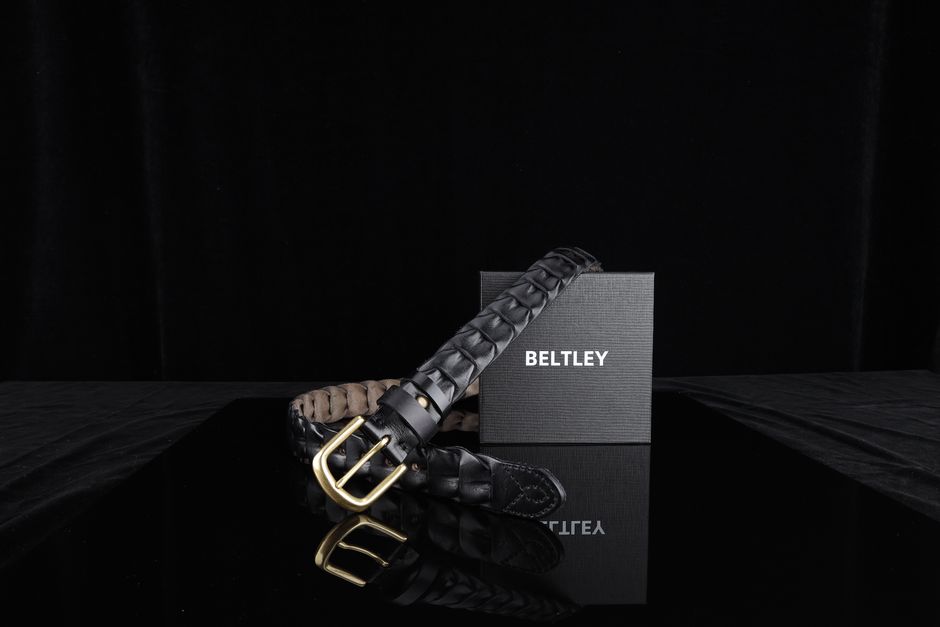
Leather belts are not always the right answer. Here are three situations where you should buy something else.
- Heavy physical labor or outdoor work. Leather absorbs sweat, stretches when wet, and develops a smell. A nylon or canvas belt from Arcade or Kore Essentials is washable, dries fast, and holds tools better.
- Hot, humid climates. Leather belts in tropical weather rot faster. A perforated leather belt or a canvas belt lets air circulate.
- Strict uniform or dress code. Some workplaces require a specific color, width, or buckle type. Ask before buying a brown full-grain belt for a job that mandates black 1-inch patent leather.
Leather belts also need periodic care. If you cannot commit to conditioning the leather every six months, you will get more life from a synthetic belt.
Color Matching: Brown, Black, and Everything Between
This section is short because the rule is simple.
Match your belt to your shoes. Brown shoes = brown belt. Black shoes = black belt. That is the only rule that matters for dress occasions.
For casual outfits, you have more freedom. A tan belt with white sneakers looks intentional. A navy belt with gray jeans works if the buckle is silver. But the safest approach for any outfit: belt matches shoes.
If you own only two belts, make them black 1.25-inch dress belt and brown 1.5-inch casual belt. That covers funerals, weddings, interviews, date nights, and most workdays.
Construction Method: Stitched vs. Cemented vs. Bridle
How the belt is assembled matters more than most men realize.
| Construction type | How it is made | Lifespan | Typical price |
|---|---|---|---|
| Bridle leather (stitched) | One thick piece of full-grain leather, hand-stitched to the buckle | 10–20 years | $100–$250 |
| Lined and stitched | Two layers of leather glued and stitched together | 5–10 years | $60–$120 |
| Cemented (no stitch) | Single layer of leather glued around a nylon core or folded edge | 1–3 years | $20–$50 |
| Nylon or canvas webbing | Woven synthetic strap with a plastic or metal buckle | 2–5 years | $15–$40 |
Bridle leather belts from makers like Equus Leather or Ashland Leather are the gold standard. They use a single thick cut of full-grain leather, often with a stitched buckle attachment. These belts can be recut if the hole stretches, re-stitched if the thread breaks, and polished for decades.
Cemented belts are the most common failure mode. The glue dries out, the leather peels apart at the fold, and the buckle detaches. You cannot repair a cemented belt. You throw it away.
Final thought on construction: If the belt costs under $50 and the description does not say “full-grain” or “stitched,” assume it is cemented. That belt will fail. Buy it only if you need a temporary solution for a specific event.