

The morning rush in a household with young children is a masterclass in logistical precision, where the transition from pajamas to professional attire must happen in a matter of minutes. For the petite mother, this transition is often thwarted by outerwear that feels more like a costume than a garment. Finding a trench coat that doesn’t drag on the floor or swallow the wearer’s hands is not just a matter of vanity; it is a matter of functional mobility. The most effective trench coat for a petite frame is one that prioritizes the vertical alignment of the storm flap and the specific ‘break point’ of the waist over mere hem length. For women 5’4″ and under, the search for outerwear often results in a ‘drowning in fabric’ effect where standard-sized features—like oversized epaulettes and low-hanging belts—overwhelm a shorter torso. After analyzing construction specifications and historical fit data, the J.Crew Icon Trench in Petite remains the most balanced option for the average budget, while the Burberry Chelsea Heritage Slim Fit offers the most precise anatomical scaling for those seeking a lifetime investment.
What makes a trench coat specifically petite versus just a small size?
A common misconception in the apparel industry suggests that a ‘Petite’ size is simply a smaller version of a ‘Regular’ size. This is inaccurate. True petite engineering involves a complete recalibration of the garment’s internal architecture. When a woman of shorter stature wears a standard size XS, she often finds the waist tie sitting across her hips rather than her natural waistline. This happens because the distance from the cervical vertebrae to the waist is shorter in petite individuals. A dedicated petite trench coat addresses this by raising the belt loops and the pocket placement by approximately one to two inches. This minor shift is what creates the illusion of longer legs and a more defined silhouette.
Beyond the waist, the shoulder breadth is a critical differentiator. Standard trenches often feature wide, structured shoulders designed for a longer wingspan. On a petite frame, these shoulders can extend past the natural deltoid, creating a boxy, unflattering silhouette that looks like a child playing dress-up in an adult’s closet. Petite-specific cuts narrow the shoulder points and shorten the sleeve length, ensuring the cuff hits exactly at the wrist bone rather than the knuckles. This prevents the need for constant cuff-rolling, which can ruin the line of a high-quality gabardine fabric. Furthermore, the armhole (or ‘scye’) is typically cut higher in petite sizing, allowing for a greater range of motion without the entire coat lifting up when you reach for a child’s hand or a grocery bag.
The importance of storm flap scaling
The storm flap—that extra layer of fabric on the chest originally designed to keep rain from seeping into the jacket—is often the biggest culprit in overwhelming a petite frame. In standard sizing, this flap can be quite large, designed to cover a broader chest area. On a petite woman, an unscaled storm flap may extend halfway down the torso, effectively cutting the body in half visually. Petite-specific designs scale this feature down so it remains a functional detail rather than a dominant visual block. When shopping, look for a flap that ends well above the bust line to maintain a longer vertical line. Additionally, check the back ‘rain guard’ or ‘yoke’; if it extends too far down the back, it can make the wearer appear hunched or shorter than they actually are.
Best petite trench coat brands for different budgets in 2025

Navigating the market requires a distinction between brands that offer a dedicated petite line and those that simply run small. The following table summarizes the top performers based on fabric weight, proportional accuracy, and price point, specifically curated for the needs of a busy family lifestyle.
| Brand & Model | Approximate Price | Fabric & Specs | Pros | Cons |
|---|---|---|---|---|
| J.Crew Icon Trench | $248 | 65% Cotton, 35% Nylon; Water-repellent. | Perfectly scaled petite proportions; machine washable (delicate). | Fabric is lighter weight than luxury heritage options. |
| Burberry Chelsea Heritage | $2,590 | 100% Cotton Gabardine; Vintage check lining. | Exceptional resale value; slim-cut shoulders; lifetime durability. | Prohibitively expensive for many households. |
| London Fog Heritage Petite | $170 | Polyester/Cotton Blend; Removable wool liner. | Includes a removable warmer for winter transitions; very durable. | The cut is more traditional and less ‘fashion-forward’. |
| Banana Republic Timeless | $250 | 100% Cotton; Water-resistant finish. | Often features higher-end finishes like horn buttons. | Sizing can be inconsistent between seasonal releases. |
| Petite Studio Jane Trench | $325 | Heavyweight Cotton Blend; Specifically for 5’4″ and under. | Designed exclusively for petites; unique colors available. | Higher price point for a non-heritage brand. |
| ASOS Design Petite | $75 | 100% Polyester; Lightweight. | Highly affordable; very modern, trendy cuts. | Synthetic fabric blends lack long-term durability. |
J.Crew Icon Trench: The Practical Family Choice
The J.Crew Icon Trench is frequently cited by researchers as the benchmark for mid-range petite outerwear. It is constructed from a sturdy cotton-nylon blend that provides enough structure to hold its shape without being overly stiff. For a parent managing school drop-offs or commuting, the water-repellent finish is essential. The petite version specifically shortens the torso and sleeves, making it one of the few coats that requires zero tailoring off the rack. The buttons are securely fastened—a minor but vital detail when toddlers are prone to pulling at loose threads. However, it is worth noting that the lining is often a simple polyester, which may not provide significant warmth in sub-50 degree weather without additional layering.
Burberry Chelsea Heritage: The Heirloom Investment
If the family budget allows for a “one-and-done” purchase, the Burberry Chelsea Heritage in their ‘Slim Fit’ is the gold standard. Burberry is one of the few luxury houses that offers a genuine petite range in their heritage collection. The gabardine fabric—a breathable, weatherproof cotton invented by Thomas Burberry in 1879—is incredibly dense and durable. The sleeves are tapered, which is a detail often missed by cheaper brands. The ‘Chelsea’ fit is particularly good for petites because it is their narrowest silhouette, preventing the ‘tent’ effect that wider cuts like the ‘Kensington’ or ‘Westminster’ can produce. From a family perspective, this is a garment that can be passed down through generations due to its timelessness and build quality, often retaining up to 60% of its value on the secondary market.
How to choose the right length: Short vs. Mid vs. Maxi for short statures
Length is perhaps the most debated aspect of petite style. Traditional fashion advice often suggests that petite women should stick to short coats to ‘show more leg,’ but this is an oversimplification. The goal is to work with the ‘Rule of Thirds.’ A coat that ends at the widest part of the calf can make a person look shorter, whereas a coat that ends either just above the knee or at the ankle can actually elongate the silhouette.
A mid-thigh length trench is the safest bet for versatility. It provides enough coverage to wear over dresses or trousers while maintaining a sporty, active look suitable for a busy family lifestyle. If you prefer a longer ‘maxi’ look, the key is to ensure the coat is slim-cut through the body. A voluminous, floor-length trench will swallow a petite frame, but a streamlined, long coat can create a continuous vertical line that makes the wearer appear taller. Avoid ‘midi’ lengths that hit mid-calf, as these are the most difficult to pull off without high heels, and they tend to get in the way when climbing stairs or loading strollers into a vehicle.
Expert Tip: When testing the length of a trench coat, always check the back vent. A vent that opens too high can look messy on a shorter frame, while one that is too low can restrict movement during activities like getting in and out of a car or chasing after children at the park. Ideally, the vent should begin just below the curve of the derriere.
Common Mistakes: The “Inspector Gadget” Effect
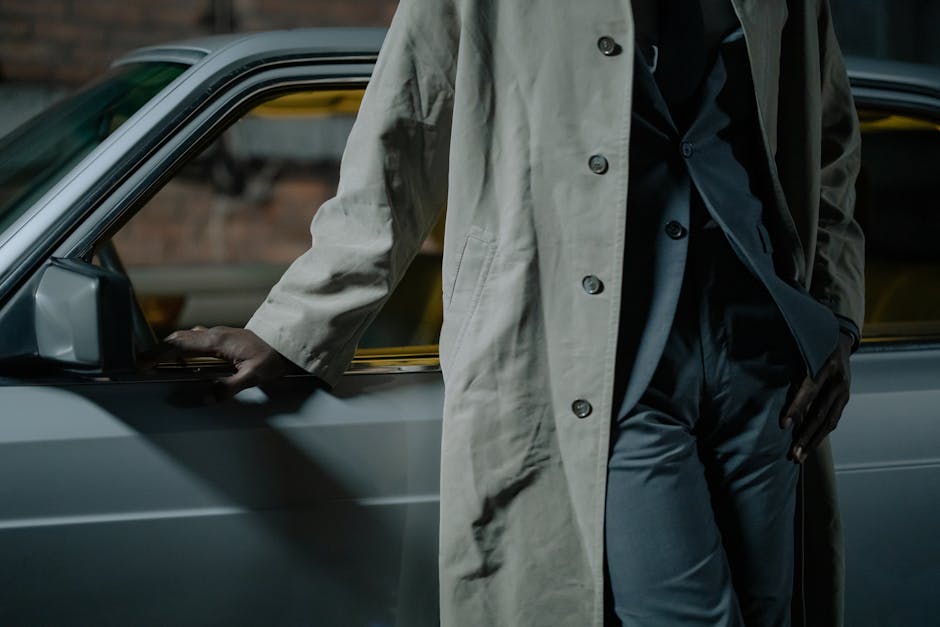
One of the most frequent errors petite women make is choosing a trench coat with too many “bells and whistles.” While traditional military details like epaulettes, D-rings, and throat latches are iconic, they add significant visual bulk. On a smaller frame, these details can accumulate, leading to what stylists call the “Inspector Gadget” effect—where the coat looks like it is wearing the person. To avoid this, look for “cleaner” petite designs. If you have narrow shoulders, consider a trench without epaulettes. If you have a shorter neck, look for a collar that isn’t too tall or stiff, as it can overwhelm your face in photos or during daily conversation.
Another mistake is over-tightening the belt. While cinching the waist is generally flattering, pulling the belt too tight on a coat with excess fabric will cause the material to bunch and flare out at the hips, creating a “bell” shape that emphasizes a shorter stature. The goal is a gentle cinch that follows the natural line of the body without creating heavy folds of fabric.
Alteration guide: Can you tailor a standard trench coat for a petite frame?
Sometimes you find a vintage trench or a high-end brand that doesn’t offer petite sizing. Is it worth tailoring? The answer depends on which parts of the coat need adjustment. Shortening a hem is a straightforward and relatively inexpensive fix, usually costing between $30 and $50. However, shortening sleeves on a trench coat is complicated by the presence of cuff straps and buckles. A skilled tailor must move the entire strap assembly upward, which can cost between $50 and $100 depending on the complexity of the lining.
The one alteration that is almost never worth the cost is narrowing the shoulders. This requires deconstructing the entire top of the coat, including the sleeves and the collar. The labor involved often exceeds the value of the coat itself and rarely looks ‘factory-original’ once finished. If the shoulders don’t fit, the coat doesn’t fit. And for petite women, the shoulder seam should sit right at the edge of the natural shoulder bone. If it droops down toward the bicep, it will create a heavy, tired look that no amount of hem-shortening can fix.
Key tailoring adjustments for a custom fit:
- Sleeve Length: Ensure the cuff ends 1/4 inch above the base of the thumb to allow for hand movement.
- Belt Loop Placement: If the coat is ‘Regular’ size, have a tailor move the belt loops up to your natural waist. This is the most transformative alteration for petites.
- Button Alignment: Sometimes moving the main buttons by just half an inch can create a more flattering ‘cinch’ at the waist.
- Epaulette Scaling: If the shoulder straps are too long, they can be shortened from the collar side to prevent them from flopping over the shoulder edge.
- Slimming the Sleeves: Many standard trenches have very wide sleeves. Narrowing the sleeve through the forearm can significantly “lighten” the look of the coat.
Fabric and durability: Choosing a trench that survives family life

A trench coat is often the most used item in a woman’s wardrobe, especially during the transitional seasons of spring and autumn. For those with families, the fabric choice is as much about maintenance as it is about aesthetics. Traditional 100% cotton gabardine is beautiful but prone to wrinkling. If you are frequently sitting in a car or carrying a child, you may find that a pure cotton coat looks disheveled by noon. A blend of cotton and polyester (usually around 65/35 or 60/40) is often more practical; it retains the classic matte look but resists deep creasing and is often more water-resistant.
Color also plays a role in longevity. While the classic ‘Honey’ or ‘Stone’ beige is the iconic choice, it is also the least forgiving when it comes to stains. For mothers, a darker ‘Navy’ or ‘Charcoal’ trench can be a more strategic choice. These colors hide the inevitable scuffs and spills of daily life while still offering the same professional silhouette. If you insist on the classic tan, look for fabrics treated with a Teflon or similar stain-resistant coating, which allows liquids to bead off the surface rather than soaking into the fibers. For minor spills, a damp cloth and a drop of mild dish soap are usually sufficient for spot-cleaning a high-quality gabardine.
Maintenance tips for long-term wear
- Steam, Don’t Iron: Heavy ironing can flatten the weave of gabardine and create a “shiny” look on the seams. Use a handheld steamer to remove wrinkles.
- Re-Waterproofing: Every two to three years, use a specialized spray-on proofer (like Nikwax) to maintain the water-repellency of the outer shell.
- Storage: Always hang your trench on a wide, padded hanger. Wire hangers can poke through the shoulder pads and permanently distort the shape of a petite-cut shoulder.
- Professional Cleaning: Only dry clean your trench once a season or after a major spill. Excessive dry cleaning can strip the natural oils from the cotton fibers, leading to premature fraying.
Ultimately, the best trench coat for a petite woman is one that honors her proportions without sacrificing the utility of the original military design. Whether you choose the accessible precision of J.Crew, the specialized focus of Petite Studio, or the luxury engineering of Burberry, focusing on the shoulder alignment and the waist break-point will ensure the garment serves as a foundational piece of your wardrobe for years to come. A well-fitted trench is more than just a raincoat; it is a structural tool that provides a polished finish to any outfit, regardless of the chaos of the day. In the context of a busy family life, it is the one piece of clothing that says you are prepared for the weather, the workday, and everything in between.