You bought a vest — maybe a textured wool waistcoat from Suitsupply, maybe a linen number from Spier & Mackay. Now you stand in front of the mirror and realize: this thing reads “wedding server” or “steampunk convention” way too easily. The problem isn’t the garment. It’s the missing rules.
Smart casual vests sit in a narrow lane between formal suiting and casual layering. Get the rules right, and the vest becomes the most versatile piece in your closet. Get them wrong, and you’re the guy everyone politely avoids at dinner.
This article covers exactly what works, what doesn’t, and why. No fluff. No “express yourself” nonsense. Just the principles that make a vest look intentional rather than costumed.
The Three Rules That Separate Intentional from Accidental
Most men fail with vests because they treat them like a standalone statement piece. A vest is not a jacket. It’s a layer that sits between your shirt and any outerwear, and it demands specific proportions to work.
Rule 1: The Armhole Must Be High
If you can see your shirt sleeve pucker when you raise your arm, the armhole is too low. A proper vest armhole should sit close to your armpit — within 1–2 inches. Suitsupply’s Havana waistcoat ($249) nails this. Cheap Amazon vests ($30–60) almost never do. Low armholes create that “borrowed from grandpa” look because the vest shifts and gaps when you move.
Rule 2: The Bottom Button Stays Open
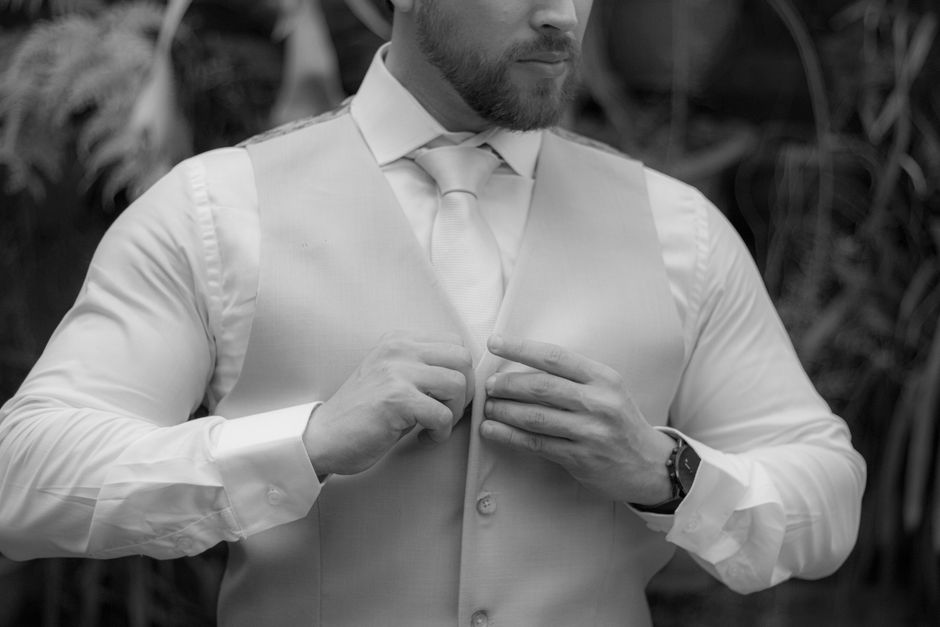
This isn’t a suggestion. It’s the rule. Buttoning the bottom button on a vest restricts movement and creates an unflattering V-shape across your stomach. Every tailor knows this. Every photo of a well-dressed man follows it. If your vest has five buttons, only button the top three or four depending on how the cut falls.
Rule 3: The Back Fabric Must Match the Occasion
Most vests have a back made of lining fabric — polyester satin or cupro. That’s fine for formal wear where a jacket covers it. For smart casual, you need the back to match the front fabric, or at least be a complementary solid. Otherwise, the moment you take off your jacket, everyone sees a shiny dinner napkin strapped to your back. Spier & Mackay’s casual waistcoats ($128) use the same cloth front and back. That’s the standard.
Five Complete Outfit Formulas That Work
Each formula below uses specific, real products. Substitutions are fine, but the principles — fabric weight, color contrast, texture balance — are not optional.
| Outfit | Vest | Shirt | Pants | Shoes | When to Wear |
|---|---|---|---|---|---|
| 1. The Textured Neutral | Suitsupply Havana in charcoal herringbone ($249) | Uniqlo oxford cloth button-down in white ($40) | Banana Republic Traveler chinos in khaki ($90) | Loake 1880 suede chukka boots ($420) | Office day, client lunch, dinner out |
| 2. The Linen Summer | Spier & Mackay linen vest in oatmeal ($128) | Proper Cloth linen button-down in light blue ($95) | Berg & Berg linen trousers in sand ($225) | Meermin unlined loafers in brown suede ($195) | Summer wedding, outdoor dinner, vacation |
| 3. The Dark Layer | Navy wool vest from Polo Ralph Lauren ($198) | Navy polo from Sunspel ($115) | Navy selvedge jeans from Naked & Famous ($165) | Black derbies from TLB Mallorca ($320) | Cocktail event, date night, gallery opening |
| 4. The Pattern Play | Glen plaid vest from Cordings ($225) | White pinpoint oxford from Brooks Brothers ($88) | Charcoal flannel trousers from Drake’s ($425) | Dark brown wholecuts from Crockett & Jones ($650) | Business casual office, formal-adjacent event |
| 5. The Casual Break | Cotton twill vest from Todd Snyder ($178) | Heavyweight t-shirt from Lady White Co. ($65) | Olive fatigue pants from OrSlow ($210) | Paraboot Michael in cognac ($495) | Weekend brunch, casual Friday, travel |
Notice what’s missing from every formula: a tie, a pocket square, a jacket over the vest. Smart casual means the vest is the outermost layer. Once you add a jacket, you’re back in suit territory. If you need a jacket, skip the vest entirely and wear a crewneck sweater instead.
Fabrics That Work and Fabrics That Scream “Costume”
Fabric choice determines whether your vest reads as intentional or theatrical. Here’s the breakdown by weight and texture.
Wool flannel and tweed (280–400 gsm) — These are the safest smart casual fabrics. They have enough texture to look deliberate without being flashy. A charcoal flannel vest from Suitsupply or a brown tweed from Cordings works with almost any neutral trouser. Avoid: black wool. Black vests read as formal or waiter-adjacent.
Linen (200–260 gsm) — Linen vests are excellent for summer but only if the weave is open enough to breathe. Spier & Mackay’s linen vests use a 220 gsm fabric that works. Avoid: linen blends with polyester. They trap heat and look cheap.
Cotton twill and moleskin (250–350 gsm) — These are your casual options. A cotton vest reads as a shirt-jacket hybrid, not a suit piece. Todd Snyder’s cotton twill vest ($178) is a good example. Avoid: cotton sateen or anything with a sheen. Shiny cotton reads as cheap formalwear.
Silk and velvet — Do not wear these for smart casual. Silk vests belong at black-tie events. Velvet vests belong in a 1970s time capsule. If you’re reading this article, you’re not ready to pull off either.
Three Mistakes That Ruin the Look

These errors show up constantly in outfit photos. Avoid them, and you’re already ahead of 90% of men who try this style.
Mistake 1: The vest is too short. A vest should cover your waistband completely. If your belt buckle is visible below the vest hem, the vest is too short. Standard vest length is 24–26 inches from shoulder seam to hem for a 40R jacket size. Measure yours. If it falls short, return it.
Mistake 2: The vest is too tight across the chest. Vests are not meant to be snug like a corset. You should be able to button it comfortably and still have 1–2 inches of fabric to pinch at the sides. If the buttons pull, size up or skip that vest. Pulled buttons create horizontal stress lines that make you look heavier.
Mistake 3: Matching the vest to the pants. This creates a suit-like appearance that kills the smart casual vibe. The vest should contrast with your trousers. Charcoal vest with khaki chinos. Navy vest with olive pants. Oatmeal linen vest with sand trousers. Contrast is what signals “I chose this intentionally.”
When a Vest Is the Wrong Choice
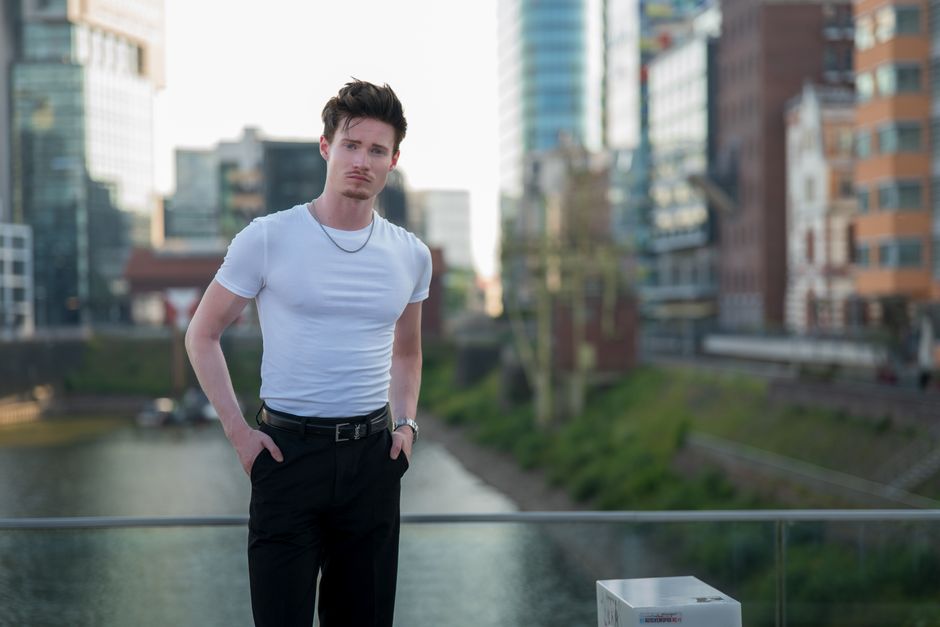
A vest is not a universal tool. Here are three situations where you should leave it in the closet.
Hot outdoor events. A vest adds a layer of insulation. If the temperature is above 85°F (30°C) and you’ll be outside for more than 30 minutes, a vest will make you sweat visibly through your shirt. Wear a linen button-down untucked instead.
Very casual settings. If the dress code is “jeans and t-shirts,” a vest will make you look overdressed and try-hard. Wear an unconstructed jacket like the Uniqlo U blouson ($80) or a chore coat instead.
If you’re broad-shouldered and narrow-waisted. Vests emphasize the V-taper of your torso. If your shoulders are significantly wider than your waist, a vest will exaggerate that shape in a way that can look unbalanced. A sweater or a field jacket will be more flattering.
The vest is a specific tool for a specific job: bridging the gap between casual and formal without a jacket. When the occasion calls for that, the formulas above work. When it doesn’t, wear something else.