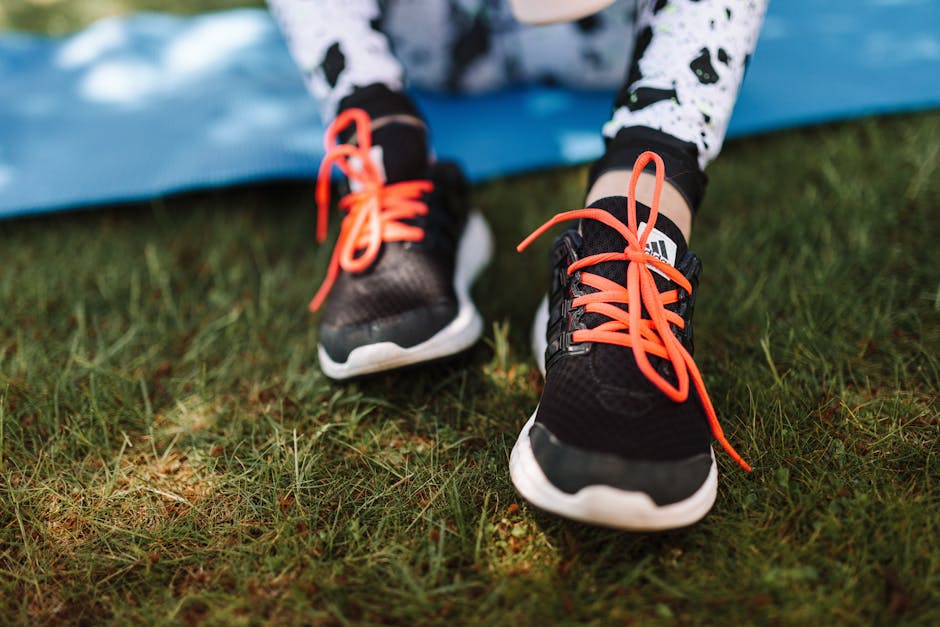
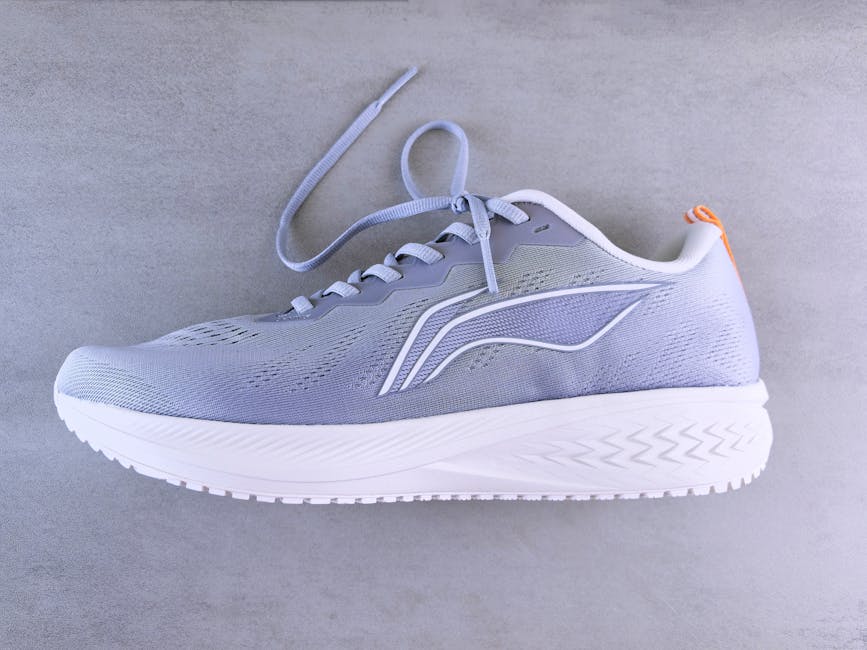
The right running shoe isn’t about brand loyalty or price point — it’s about matching shoe construction to foot mechanics. Buy the wrong shoe for your foot type and you’ll deal with knee pain, shin splints, or blackened toenails regardless of what you spent. Get the match right, and a $110 shoe will outperform a $200 one.
Below: how to identify your foot type in minutes, the four mistakes that lead to wasted purchases, and five specific shoes matched to five distinct foot profiles.
How to Read Your Foot Type Before Shopping
Before any shoe recommendation makes sense, you need two pieces of information: your arch profile and your pronation pattern. These are related but not the same thing, and confusing them is the root cause of most bad purchases.
What does the wet foot test actually tell you?
Wet the sole of your foot, step onto a piece of dark cardboard, and look at the imprint. A full-contact print with little to no curve on the inside edge means a flat or low arch. A sharp inward curve with minimal midfoot contact is a high arch. A moderate curve that’s roughly half-filled is a neutral arch.
Thirty seconds. Eliminates the wrong category immediately. It’s not a perfect test, but it’s a fast first filter that works before you walk into any store.
What’s the difference between arch height and pronation?
Arch height is structural — built into your foot. Pronation is a motion — how your foot rolls from heel to toe with each stride.
Most flat-arch women overpronate: the foot collapses inward on impact, stressing the knee and hip. Most high-arch women underpronate (also called supinate): the foot stays rigid and doesn’t absorb shock the way it should. But these aren’t universal correlations. Some flat-arch runners have perfectly neutral pronation. Gait is individual, which is why watching how you actually run matters more than a static arch test.
Is a gait analysis worth doing?
Yes — and it doesn’t cost anything. Most specialty running stores, including Fleet Feet and Road Runner Sports, put you on a treadmill for 60 seconds, film your stride from behind, and identify your ankle roll pattern. Takes under 10 minutes and is available at no charge when you’re buying shoes.
No store nearby? Film yourself running on a treadmill from behind. Watch your ankles from heel strike through toe-off. Ankles caving inward = overpronation. Ankles upright or leaning slightly outward = neutral or underpronation. That single observation determines whether you need a stability shoe or a neutral one — which is the most consequential decision in this whole process.
4 Running Shoe Mistakes That Cause Pain and Wasted Money
Most running shoe regrets trace back to the same short list of errors. These apply regardless of which specific shoe you’re considering.
Judging fit at rest, not during movement. In-store comfort is nearly meaningless on its own. Your foot spreads and lengthens under running load. A shoe that fits perfectly while standing may compress your toes painfully 20 minutes into a run. Always test with a short jog inside the store, not just a walk around the carpet. Make sure there’s a thumbnail of space between your longest toe and the front of the shoe at rest — because that gap closes when your foot loads.
Going up a size to accommodate width. Extra length doesn’t fix forefoot narrowness. It creates heel slippage and hot spots. Wide-width versions exist in most major running shoe lines. New Balance, Brooks, and ASICS all offer 2E and 4E options in women’s styles. Find those designations before sizing up.
Confusing stability with support. Stability shoes contain motion-control features specifically for overpronators — runners whose feet collapse inward. A high-arch runner who picks a stability shoe because it “feels firm and secure” is restricting the limited inward roll her foot does need. This is a direct path to IT band syndrome and plantar fasciitis. Firm does not mean correct for your foot type.
Ignoring heel-to-toe drop. Drop is the height difference between the heel and forefoot of the shoe. High drop (10–12mm) suits runners who naturally land on their heels. Low drop (4–6mm) suits midfoot or forefoot strikers. Neither is universally better. What matters is whether the drop matches your natural gait. Switching abruptly from a 12mm-drop shoe to a 4mm-drop shoe causes calf and Achilles strain, especially for heel strikers who make up the majority of casual runners.
One more thing: don’t copy a friend’s shoe choice without checking whether her foot type matches yours. A recommendation built on someone else’s mechanics is worse than no recommendation at all.
Flat Feet and Overpronation: Brooks Adrenaline GTS 23 Is the Right Call
Not a close decision. For women with flat arches who overpronate, the Brooks Adrenaline GTS 23 ($140) is the most reliable everyday trainer in this category. It works, it comes in multiple widths, and it’s been refined across 23 versions to handle exactly this foot profile without overcorrecting.
When your foot overpronates, every stride transfers excess inward stress up the kinetic chain — knees, hips, and lower back absorb what the foot mechanics can’t manage. A stability shoe’s job is to limit that excess inward roll. The Adrenaline does this through Brooks’ GuideRails system, placing denser foam bumpers on both sides of the heel.
What GuideRails actually does
GuideRails doesn’t prevent pronation — pronation is normal and necessary. It limits the range. The bumpers allow your foot to move naturally through its full stride but provide resistance if it rolls past your individual threshold. The result: overpronators report significantly less knee pain on longer runs compared to neutral trainers, without the locked-in feeling of older motion-control shoes.
At 12mm drop and 9.1 oz (women’s 8), the Adrenaline accommodates natural heel strikers without asking for a gait change. Available in standard and wide widths, which matters for the large percentage of flat-arch women who also have wider forefeet.
How it compares to the ASICS Gel-Kayano 30
The ASICS Gel-Kayano 30 ($160) is the main competitor, using a dual-density midsole with the 4D Guidance System. Similar philosophy. But the Kayano weighs 9.7 oz and runs noticeably narrower through the toe box — a real problem for anyone whose forefoot spreads during impact, which is extremely common.
For women with flat arches and a standard or wide forefoot, the Adrenaline is the clearer choice and costs $20 less. The Kayano makes sense only for flat-arch runners with genuinely narrow feet. If you’re not certain, try both — but the Adrenaline fits more foot shapes without compromise.
High Arches: Maximum Cushioning Over Motion Control
High-arch feet have one core problem — they don’t absorb shock the way lower-arch feet do. The fix is cushioning. Not structure, not stability, not motion control.
The Hoka Bondi 8 ($165) is built for this. It carries 37mm of stack height at the heel, the most of any Hoka trainer, and uses a meta-rocker geometry that guides the foot through its stride without requiring the inward roll a high-arch foot can’t produce. At 4mm drop, it also puts the foot in a more neutral ground position, which suits the midfoot strike pattern common in high-arch runners.
Why stability shoes hurt high-arch runners
A stability shoe restricts inward ankle motion. A high-arch foot already doesn’t roll inward enough. Put a high-arch runner in a stability shoe and you’ve locked an already-rigid foot into a structure that prevents even the small natural pronation it does need. Stress fractures and chronic plantar fascia pain follow.
The error happens because stability shoes feel firm and “supportive” in the store. That firmness is the problem, not the solution, for this foot type. The Bondi 8 feels soft in comparison — and that softness is exactly what’s doing the work.
When the ASICS Gel-Nimbus 25 is the better choice
The ASICS Gel-Nimbus 25 ($160) is also maximum-cushion and neutral. At 8.8 oz and 10mm drop, it runs slightly more flexible than the Bondi 8, with more ground response on shorter efforts. For high-arch women running 3–5 miles a few times a week, the Nimbus is a solid alternative with a more traditional shoe feel and marginally lower price.
For half marathon training and above, the Bondi 8’s cushioning depth is the better investment. The Nimbus doesn’t carry the same shock-absorption capacity at high mileage, and high-arch runners feel the difference faster than neutral runners do.
Wide Feet and Neutral Arches: Three Shoes, Three Scenarios
Neutral-arch runners with different widths and training goals need different tools. Here’s how the remaining three shoes compare across the variables that actually matter:
| Shoe | Best For | Drop | Weight (Women’s 8) | Width Options | Price |
|---|---|---|---|---|---|
| New Balance Fresh Foam X 1080v13 | Wide feet, neutral arch, daily training | 6mm | 8.7 oz | B, D, 2E | $165 |
| ASICS Gel-Nimbus 25 | Neutral arch, long distance | 10mm | 8.8 oz | Standard, 2E | $160 |
| Saucony Kinvara 14 | Neutral, narrow feet, speed work | 4mm | 6.7 oz | Standard only | $110 |
New Balance Fresh Foam X 1080v13 for wide-foot runners
The 1080v13 uses Fresh Foam X compound — softer and more responsive than New Balance’s standard Fresh Foam. In the 2E wide version, the forefoot has room to spread naturally during impact. That’s what prevents the toe compression and blackened toenails that wide-footed runners deal with in standard-last shoes, and it’s why this shoe keeps showing up as the default recommendation for women who have spent years fighting narrow toe boxes.
At $165 with a 6mm drop, it sits between the plush long-distance ride of the Nimbus and the responsive lightness of the Kinvara. Versatile enough for both easy miles and moderate-pace training runs. The best all-purpose pick for neutral-arch women with wide or high-volume feet.
Saucony Kinvara 14 for neutral runners focused on pace
At 6.7 oz and $110, the Kinvara 14 is the lightest and least expensive shoe on this list — and the most limited. It’s built for speed, not mileage accumulation. The narrow last and minimal cushioning make it a strong choice for 5K and 10K racing, track work, or short tempo runs. Using it as a high-mileage daily trainer leads to fast midsole compression; the foam packs out noticeably faster than the Nimbus or 1080v13 under heavy use.
The specific scenario where it wins: neutral arch, standard-width feet, under 20 miles per week at a faster pace. In that case, the Kinvara 14 at $110 saves $50–55 over the Nimbus and delivers a more responsive, ground-connected ride. Outside that scenario, step up to one of the cushioned options.
Quick Match: Which Shoe Fits Which Foot
Two rules hold across all five picks: buy the correct width, and test the shoe while running — not standing. Everything else follows from foot type.
What if my foot doesn’t fit neatly into one category?
Mixed profiles are common — flat arch with moderate rather than severe overpronation, or high arch with occasional neutral behavior. When in doubt, prioritize pronation over arch height. Overpronation, even with a moderate arch, needs a stability shoe. Underpronation, even with a moderate arch, needs cushioning over structure. Width is non-negotiable regardless of pronation: a stability shoe in the wrong width is worse than a neutral shoe in the right one.
Which shoe offers the best price-to-value ratio?
For overpronators: the Brooks Adrenaline GTS 23 at $140 beats the $160 Kayano for most foot shapes. For neutral runners with lighter mileage: the Saucony Kinvara 14 at $110 is the strongest value on the list. For high-arch runners, wide-foot runners, or anyone logging serious distance — the $160–$165 range is the right investment. Underspending on cushioning or width accommodation tends to cost more in recovery time than it saves at checkout.
- Flat feet + overpronation: Brooks Adrenaline GTS 23 — $140, 12mm drop, GuideRails stability, available in wide widths
- High arches + underpronation: Hoka Bondi 8 — $165, 37mm heel stack, 4mm drop, meta-rocker geometry
- Wide feet + neutral arch: New Balance Fresh Foam X 1080v13 — $165, 2E width available, 6mm drop, Fresh Foam X midsole
- Long distance + neutral arch: ASICS Gel-Nimbus 25 — $160, 10mm drop, 8.8 oz, max cushion for high mileage
- Speed work + neutral narrow feet: Saucony Kinvara 14 — $110, 6.7 oz, 4mm drop, not for daily high-mileage use